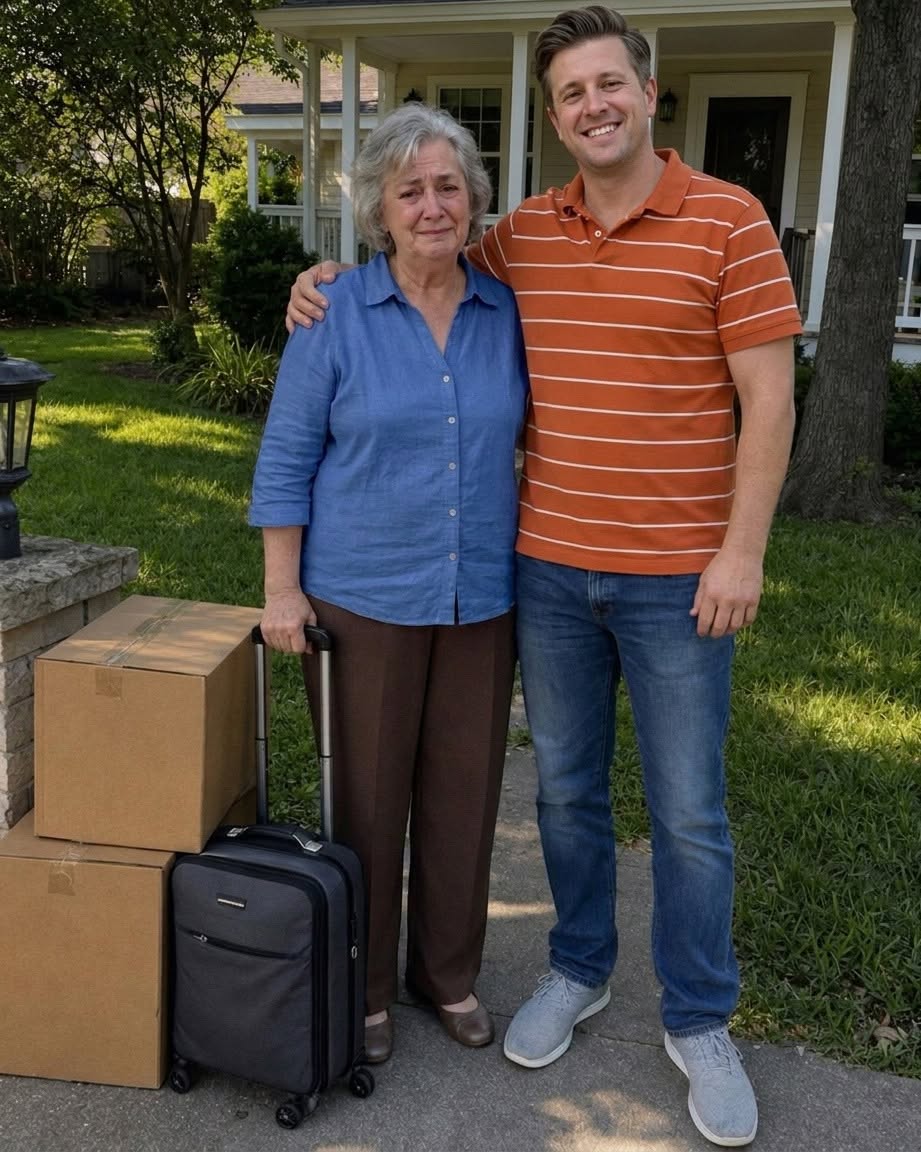
He married Emily, a kind woman who mailed handwritten thank-you notes and remembered my birthday without reminders.
They lived in a small downtown apartment where the rent increased every year.
“We are saving,” Emily told me over Christmas dinner. “Slowly, but we are.”
Jason stared at his plate.
“You will get there,” I said.
His eyes moved toward my dining room and then to the staircase.
I noticed.
I said nothing.
My house was not impressive.
Three bedrooms.
Chipped blue siding.
A porch Daniel had rebuilt twice because the first one leaned.
But families priced out of Bellford were moving into our town, and property values kept rising.
Developers began mailing offers to longtime homeowners.
I threw mine away.
Around the same time, Jason started asking questions.
“Have you ever had the house appraised?”
“No.”
“You should.”
“Why?”
“Just curious.”
A few weeks later, he asked whether I used the upstairs bedrooms.
“Not every day,” I said.
“That is a lot of empty space.”
“I’ve become used to it.”
He laughed, and I thought nothing of it.
He was my son.
I answered because I never believed I needed to protect myself from him.
Then, on a rainy Tuesday in March, someone knocked shortly after lunch.
I opened the door and found Jason holding an overnight bag.
His hair was damp.
His smile looked uncertain.
For one foolish second, I thought he had come because he missed me.
“Jason!”
I hugged him before he could step inside.
“Easy, Mom,” he said, laughing. “I need to breathe.”
“You should have warned me. I would have cooked.”
“You always cook.”
“Because you always arrive hungry.”
He stepped inside, glanced around, and put his bag beside the stairs.
Again, his eyes lingered there.
I made coffee and grilled cheese, the lunch he had loved when he was twelve.
For an hour, everything felt normal.
He told me about a difficult client.
I reminded him about the time he glued his hand to a science project.
“I was nine,” he protested.
“You were confident.”