Frequent handwashing, harsh soaps, alcohol-based sanitizers, and prolonged water exposure can also dry out the skin. Dry skin loses natural oils that help protect the skin barrier, making hands appear rough, cracked, or more wrinkled than usual. Applying fragrance-free moisturizers after washing can help restore hydration and reduce irritation.
People whose jobs require repeated water exposure—such as healthcare workers, cleaners, chefs, hairdressers, and swimmers—are particularly prone to dry, irritated hands. Wearing protective gloves when appropriate and using gentle cleansers may help prevent skin damage.
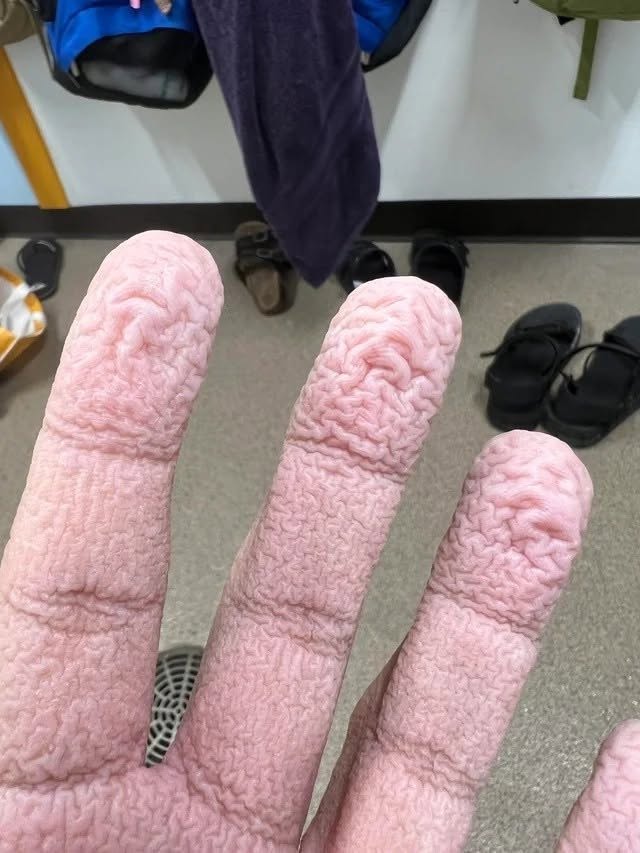
Another interesting observation is that people with certain nerve injuries may not develop fingertip wrinkles after soaking their hands in water. Because the process depends on healthy nerve function, doctors have occasionally used this response as one small clue when evaluating nerve injuries, although it is not used as a stand-alone diagnostic test.


Medical attention is recommended if finger wrinkling occurs without water exposure, is accompanied by severe pain, numbness, discoloration, ulcers, persistent swelling, or significant skin peeling. These symptoms could indicate circulation problems, skin disease, or other conditions requiring evaluation.
In most cases, however, wrinkled fingers after bathing, swimming, or washing dishes are simply a normal biological response. Rather than indicating that your body has absorbed too much water, they reflect the remarkable way your nervous system helps improve grip in wet conditions.
Understanding why this happens can help separate scientific fact from internet myths. While temporary wrinkles are usually nothing to worry about, paying attention to unusual or persistent changes in your skin remains an important part of maintaining your overall health.